
Hypnotherapy
Hypnotherapy for Anxiety & Stress in Bangkok
Hypnotherapy for anxiety in Bangkok focuses on persistent stress, worry, tension and automatic responses to triggers. The work is goal-oriented and tailored to the situations where you most want a different response.
You do not need a diagnosis to start. More on Hypnotherapy
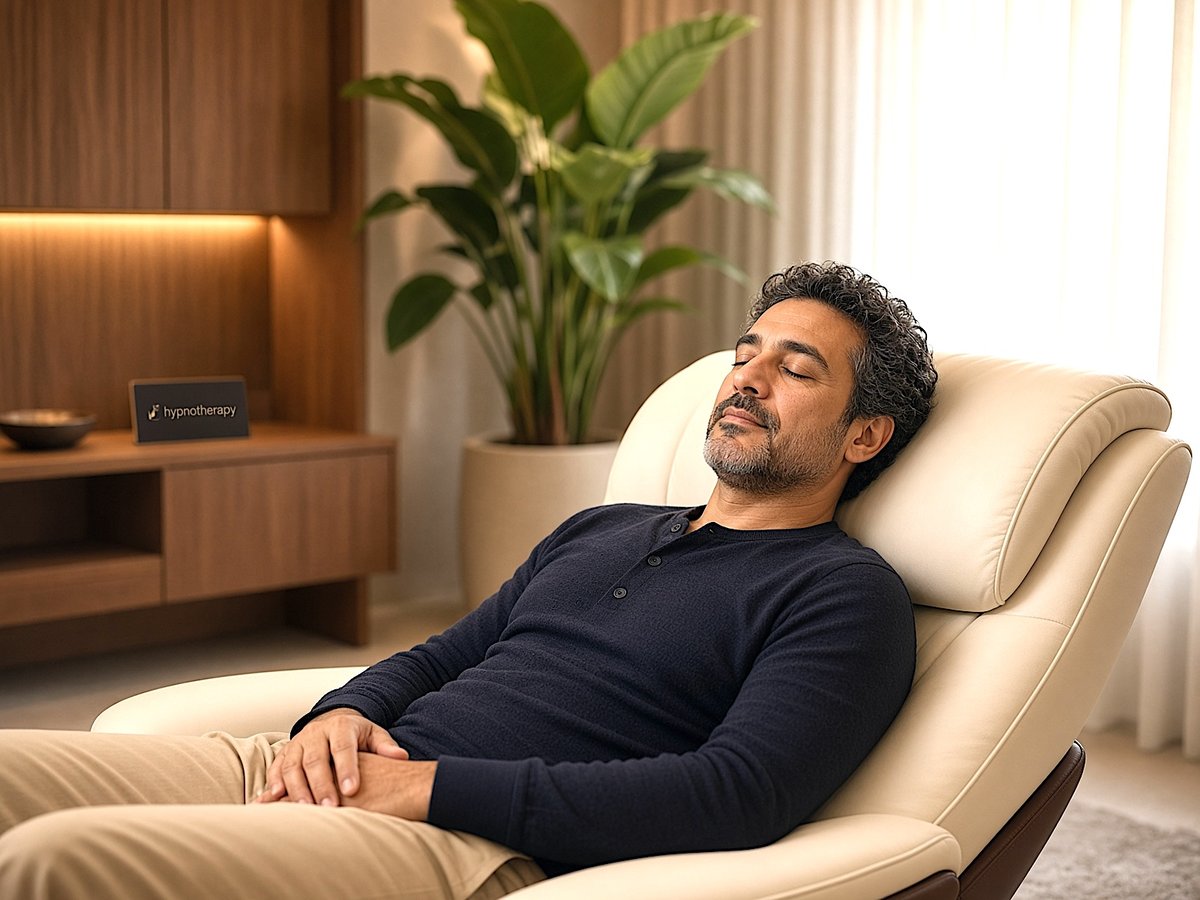
Your body can react before your thinking mind has caught up
You may understand that the meeting is safe, the flight is routine, the conversation is manageable, or the situation is not actually dangerous. Yet your body tightens, your thoughts race, and part of you behaves as if something urgent is about to happen.
Hypnotherapy for anxiety in Bangkok is a focused service for working with those automatic stress responses. It can be used on its own for a specific anxiety pattern or alongside talk therapy when anxiety is connected to wider experiences, relationships, or longstanding beliefs.
Anxiety can become a learned response
Repeated anxiety often creates associations. A place, sensation, thought, memory, or situation starts to predict discomfort, so your system becomes alert earlier the next time.
- Your stomach tightens before a meeting even when you feel prepared
- You become tense as bedtime approaches because you expect another bad night
- A particular social situation triggers self-consciousness before anyone has said anything
- You notice a physical sensation and immediately fear that something is wrong
- You prepare excessively because being unprepared feels intolerable
- You know the fear is exaggerated but still cannot relax your response
Hypnotherapy for stress can focus on changing the way you respond to those cues rather than arguing with the same anxious thought repeatedly.
What does anxiety hypnotherapy involve?
The session begins with ordinary conversation about the anxiety. What situations trigger it? What happens in your thoughts and body? What do you do next? What would a useful change look like in real life?
The hypnotherapy portion may then use focused attention, imagery, rehearsal, suggestion, or other methods within the therapist's approach. The goal is not to erase all anxiety. Anxiety is a normal human response. The work is aimed at patterns where the response has become too strong, too automatic, or too disruptive for the situation.
You remain involved in the process
Hypnosis is not something done to you while you lose control. You remain able to communicate and stop. If a technique feels uncomfortable or does not fit your goal, you can say so.
This matters particularly with anxiety because feeling trapped or out of control can itself be a trigger. The therapist should explain the process clearly enough that you know what is happening and why.
When talk therapy and hypnotherapy work together
Sometimes the anxiety is very specific, such as performance pressure or a conditioned reaction in one situation. At other times, it connects to deeper patterns involving trauma, self-criticism, relationships, perfectionism, or chronic stress. In those cases, hypnotherapy may be one part of broader therapy rather than the entire service.
The method should fit the problem. If your anxiety needs a different form of assessment or treatment, the therapist should be able to say that rather than forcing every concern into hypnosis.
Anxiety and stress in Bangkok
Work pressure, relocation, language differences, cross-cultural relationships, traffic, uncertainty, and distance from familiar support can all add stress for people living in Bangkok. For Thai clients, family and workplace expectations may create different pressures. Your anxiety may also have nothing to do with location.
Hypnotherapy in Bangkok can take the context into account while staying focused on the particular reaction you want to change.
A specific target makes focused work more useful
"I want less anxiety" can cover too much. It is more useful to identify a situation you can recognise and measure, such as speaking in a meeting without the usual rush of panic, getting on a flight without hours of anticipatory tension, or going to bed without starting the same worry cycle. A concrete target helps the therapist choose an appropriate method and helps you judge the work by what changes in real life.
Start with one situation you want to handle differently
You do not need to explain your entire life before beginning focused work. Start with a concrete example: the meeting, bedtime, flight, social event, physical sensation, or recurring situation that sets the anxiety off.
From there, you and the therapist can decide whether hypnotherapy is appropriate, what the target should be, and how you will recognise useful change outside the therapy room.
Common questions
What a session looks like
- Fifty minutes, weekly to start. You adjust the rhythm once you know what you need.
- In person at Thong Lor, or by video from anywhere in Thailand.
- In English or Thai, whichever you think in.
- Private. What you say stays between you and your therapist.
Related to this
Hypnotherapy for Confidence
Hypnotherapy for confidence in Bangkok can focus on self-doubt, performance pressure, nerves and automatic reactions that interfere with how you want to feel or perform in specific situations.
Hypnotherapy for Habits
Hypnotherapy for habits in Bangkok focuses on repetitive behaviours, triggers and automatic patterns you want to change. The work starts with a clear goal and the situations where the unwanted habit tends to appear.
Hypnotherapy for Sleep
Hypnotherapy for sleep in Bangkok for insomnia-related patterns, racing thoughts, bedtime tension and difficulty switching off. Sessions focus on the habits and automatic responses that have become linked with sleep.
Trauma Hypnotherapy
Trauma-informed hypnotherapy in Bangkok for triggers and automatic responses connected to difficult past experiences. Safety, consent, pacing and your ability to pause or stop remain central throughout the work.
Book a session
Tell us a little about what is happening and we will match you with the right therapist. We reply within one working day.